Small but mighty.

Recommended accessory for Mid-360L
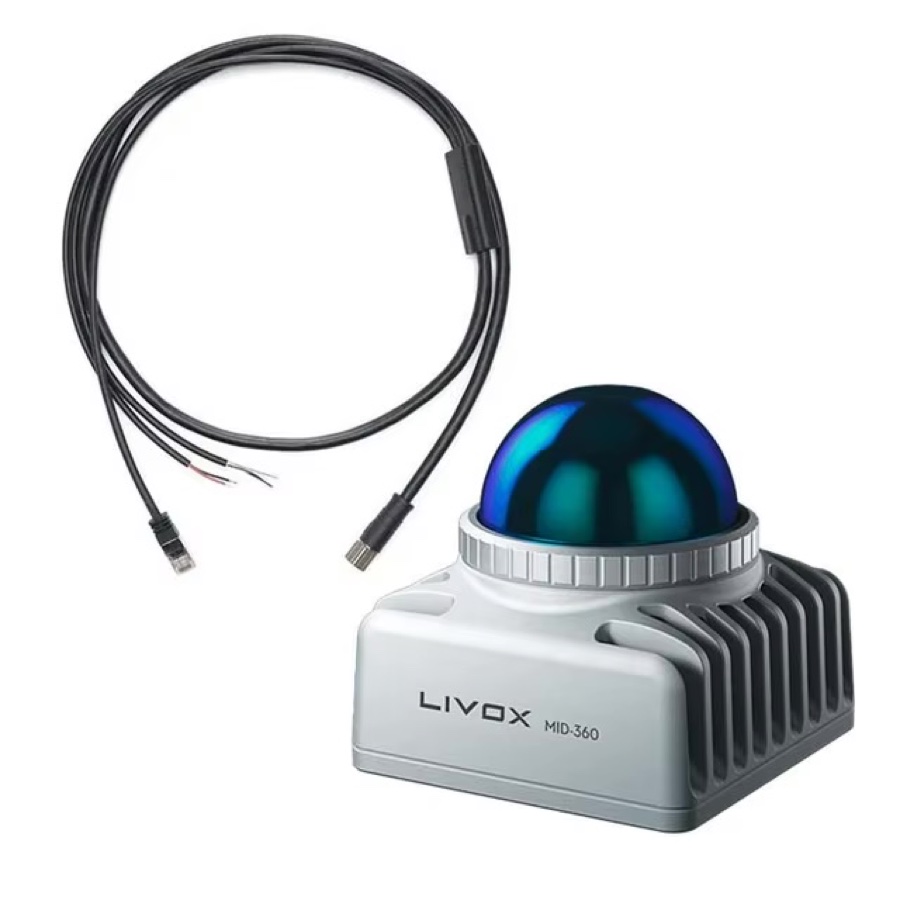
Splits the sensor’s M12 aviation connector into power leads, an RJ45 Ethernet plug and the sync/function lead — the quickest way to get Mid-360L running on the bench. Other lengths available on request.
Mid-360L is the cost-effective 3D LiDAR from Livox for mobile robots built in large numbers — robotic mowers, cleaning machines, AMRs and autonomous forklifts. It keeps the core of the Mid-360 platform: a 360° horizontal field of view from hybrid rotating-mirror scanning, a 10 cm minimum range, a built-in IMU and an IP67 housing, in a 245 g module priced for fleet-scale deployment. Distributed in Poland and Europe by TPI, with local technical support and service.

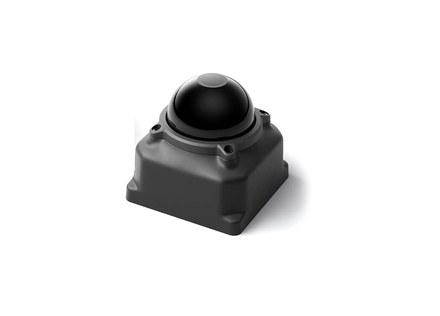
Mid-360L — dark, sealed housing rated IP67
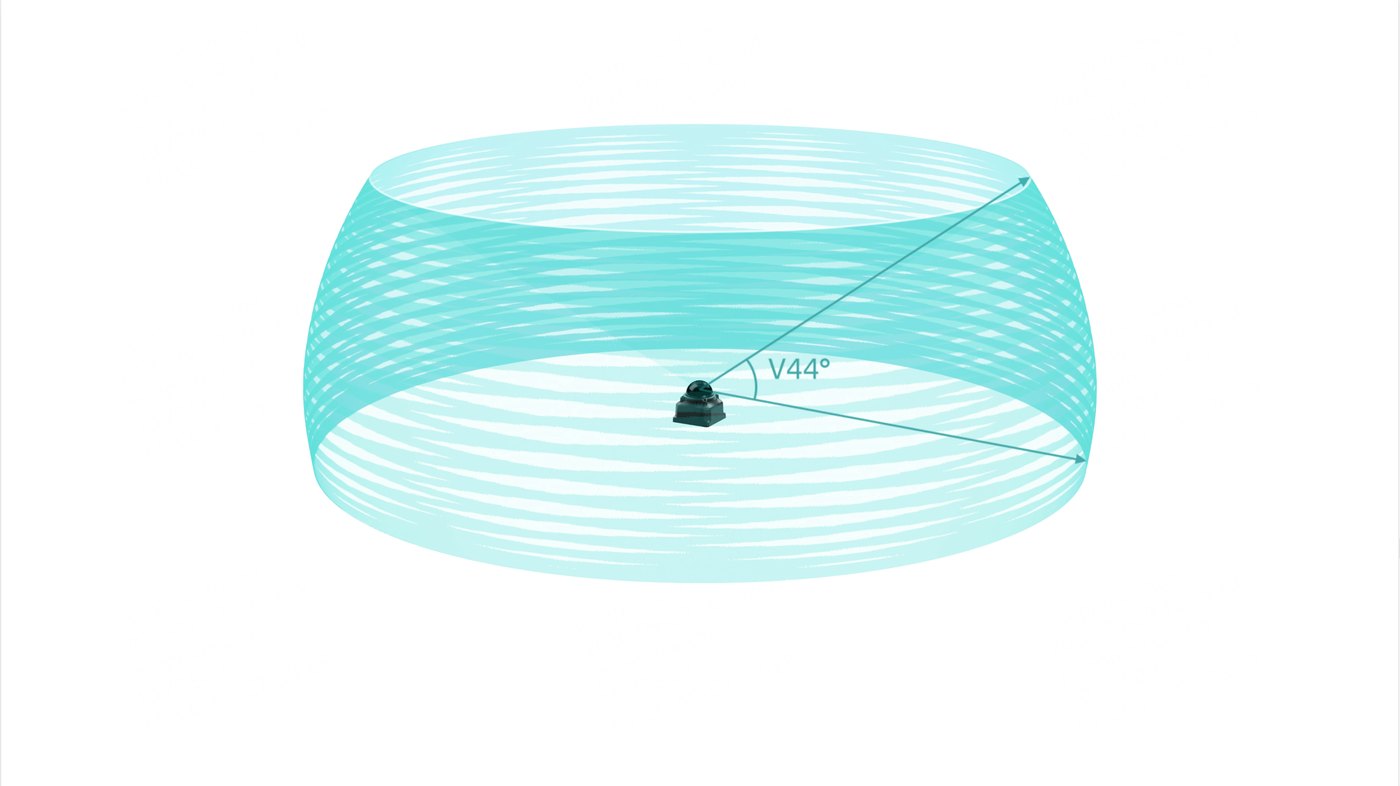
Mid-360L scans with Livox’s hybrid rotating-mirror technology instead of a spinning mechanical head. It covers 360° horizontally and 44° vertically (−10° to +34°), so the robot sees its surroundings in every direction at once — the input it needs to plan a route and decide where to go next.
At 65 × 65 × 63 mm and 245 g, Mid-360L fits inside a mower shell, the bumper of a cleaning machine or the mast of a forklift — integrators can build the sensor into the body instead of designing around it.

Mid-360 (left) and Mid-360L (right) — the same 65 × 65 mm footprint
Mid-360L returns points from as close as 10 cm, which together with its small housing leaves practically no blind zone around the robot. Several units can work side by side without disturbing each other, and bright sun or complete darkness doesn’t change the detection range.
Minimum detection range — virtually no blind zone
Anti-interference between nearby LiDAR sensors
Same range in daylight and darkness (45 m @10%, 100 m cut-off)
Low obstacles right next to the robot — a kerb, a chair leg, a cable on the floor — stay visible. That matters most for machines that dock, turn on the spot or work along walls. Points between 0.1 and 0.2 m are for reference only, and very thin, black or glossy objects within the first metre may be missed (see footnotes).
With active anti-interference on, Mid-360L rejects pulses from other LiDAR sensors — including other Mid-360L units on the same robot or on neighbouring machines in the same hall.
Detection range stays the same at noon on a lawn and in an unlit underground car park: 45 m on a 10% reflective target, with a 100 m cut-off range.
Compared with a 2D single-line LiDAR, Mid-360L captures far more feature points in every scan. Robots can build a reliable map without reflectors, markers or other changes to the site, which shortens commissioning and lowers deployment cost — and small obstacles that a single scan line would pass over are picked up.

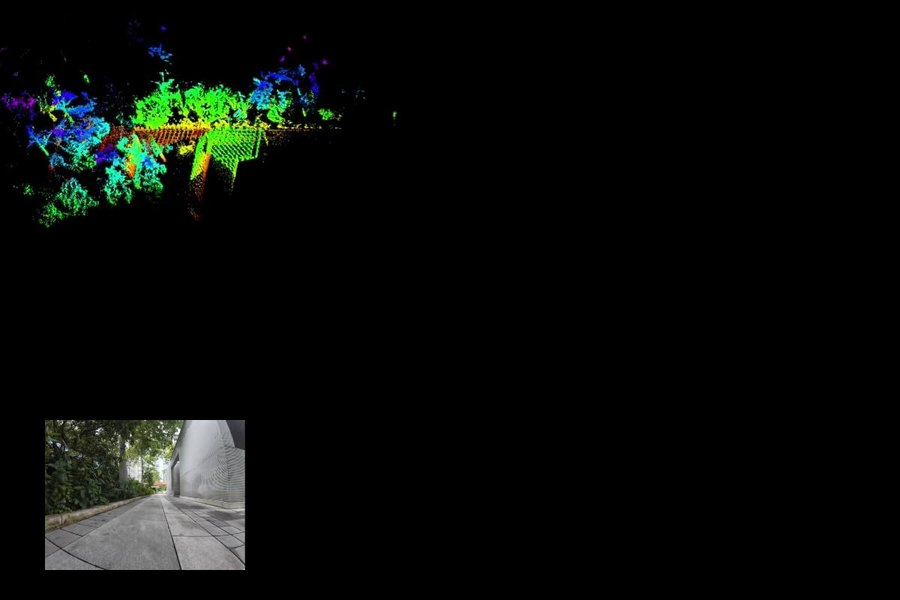
Mid-360L doesn’t trace the same lines on every pass. Its scan pattern keeps shifting, so the part of the scene that hasn’t been hit shrinks the longer the sensor looks — after a short integration time the coverage approaches that of far more expensive multi-line LiDARs.
The lower price doesn’t come from cutting core features. Livox points to three changes behind it:
Livox designs the core sensing chip itself, keeping control over the key component and its cost
Reworked core algorithms need less processing power from the chip
Upgraded production lines raised hourly output more than threefold
Livox recommends Mid-360L for machines produced in volume, where the sensor’s price matters as much as its specs.
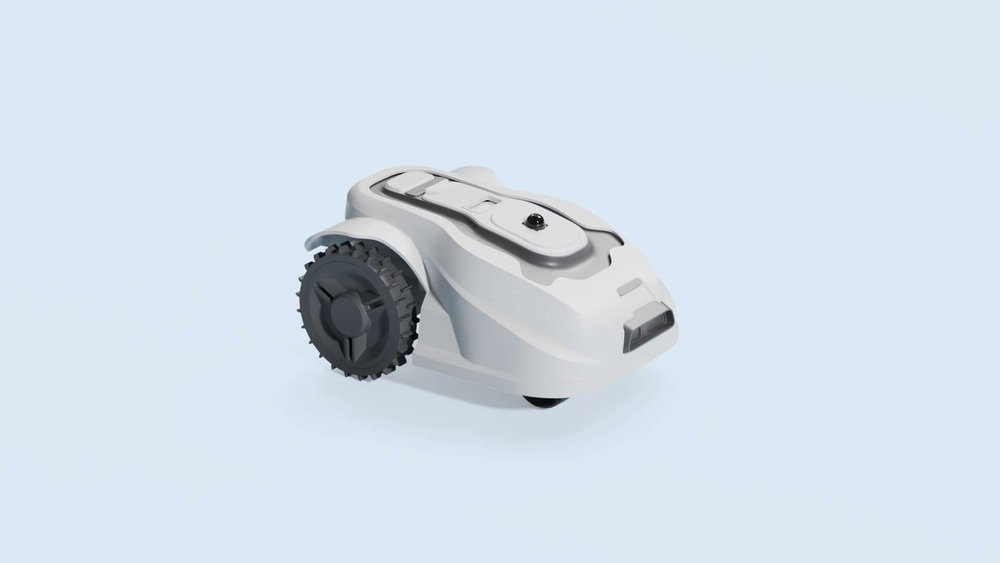
A 360° view lets a mower map the garden without a boundary wire and spot obstacles — toys, garden furniture, pets — before driving into them. Range doesn’t drop in direct sun, and the IP67 housing copes with rain, dust and grass clippings.
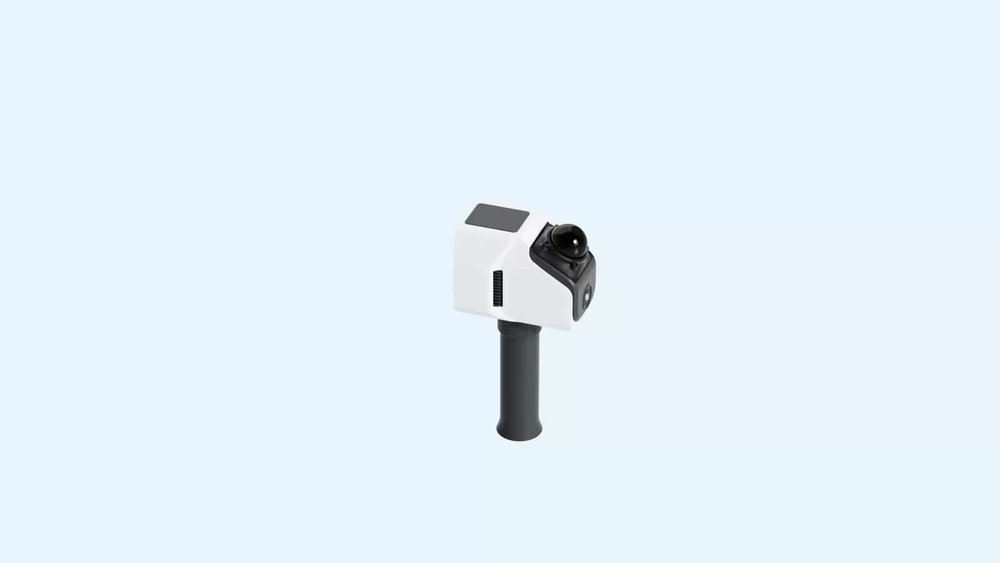
In a handheld scanner the operator simply walks, and the 360° field of view collects walls, floor and ceiling in a single pass. At 100,000 points per second and ≤ 3 cm range precision (1σ at 10 m), Mid-360L suits quick as-built documentation and volume estimates.
Where single-point survey-grade accuracy is required, a static scanner or total station remains the right tool — mobile scanning always carries some trajectory drift.
Scrubbers and sweepers work close to walls, shelving and people. The 10 cm minimum range and full horizontal coverage help with edge cleaning and avoiding low obstacles — indoors and on car parks or pavements.

One 3D sensor on top of an AMR handles localisation, obstacle detection and docking, replacing several 2D scanners mounted at different heights. Active anti-interference keeps a fleet of robots in the same warehouse from blinding each other.

Mounted on the mast or overhead guard, Mid-360L gives the vehicle a 3D view of racks, pallets and aisles for navigation and load handling.
In applications subject to machine-safety requirements it works alongside a certified safety scanner, not as a replacement for one.

Same 65 × 65 mm footprint and 360° hybrid scanning — the differences are point rate, vertical field of view, precision and price.
 Mid-360LYou’re here |  Mid-360SSee Mid-360S | |
|---|---|---|
| Net price | €349 | €599 |
| Range (@100 klx) | 45 m @10% 100 m (cut-off) | 40 m @10% 100 m (cut-off) |
| Point rate | 100,000 pts/s | 200,000 pts/s |
| Horizontal FOV | 360° | 360° |
| Vertical FOV | −10°…34° (44°) | −7°…52° (59°) |
| Range precision (1σ) | ≤ 3 cm (@10 m) ≤ 5 cm (@0.2 m) | ≤ 2 cm (@10 m) ≤ 4 cm (@0.2 m) |
| Angular precision (1σ) | < 0.3° | < 0.15° |
| Minimum range | 0.1 m | 0.1 m |
| False alarm rate (@100 klx) | < 0.01% | < 0.01% |
| Supply voltage | 12–27 V DC | 9–27 V DC |
| Power | 4.2 W Startup 14 W | 6.5 W Startup ≤ 18 W |
| Dimensions (L×W×H) | 65 × 65 × 63 mm | 65 × 65 × 60 mm |
| Weight | 245 g | 265 g |
| Operating temperature | −20 °C…65 °C | −20 °C…55 °C |
| Time synchronization | IEEE 1588-2008 (PTPv2) GPS (UTC + PPS) | IEEE 1588-2008 (PTPv2) GPS (UTC + PPS) |
| Data interface | 100BASE-TX Ethernet | 100BASE-TX Ethernet |
| Ingress protection | IP67 | IP67 |
Source: official Livox specification sheets.
How to choose: Mid-360L where a robot needs dependable 360° navigation and obstacle avoidance at the lowest cost per unit. Mid-360S where denser point clouds, a taller vertical view or better range precision matter — mapping-heavy platforms or legged robots, for example.
| Model | Mid-360L |
|---|---|
| Laser wavelength | 905 nm |
| Laser safety class | Class 1 (IEC60825-1:2014) — eye-safe |
| Detection range (@100 klx) | 45 m @10% reflectivity (typical) · 100 m (cut-off range) 2 |
| Blind zone | 0.1 m 1, 4 |
| Field of view (FOV) | Horizontal: 360° · Vertical: −10°…34° (typical) |
| Range precision (1σ) | ≤ 3 cm (@10 m) · ≤ 5 cm (@0.2 m) 3 |
| Angular precision (1σ) | < 0.3° |
| Point rate | 100,000 pts/s (first return) |
| Frame rate | 10 Hz (typical) |
| Data port | Ethernet 100BASE-TX |
| Data synchronization | IEEE 1588-2008 (PTPv2), GPS (UTC + PPS) |
| Anti-interference | Available |
| False alarm rate (@100 klx) | < 0.01% |
| IMU | Built-in (ICM40609) |
| Operating temperature | −20 °C to 65 °C 5 |
| IP rating | IP67 |
| Power consumption | 4.2 W (typical) · 14 W at startup (≈1 s) |
| Supply voltage | 12–27 V DC |
| Dimensions | 65×65×63 mm |
| Weight | 245 g |
| Connector | M12 A-code, 12-pin, male (IP67) |
| Mounting | 4 × M3 holes, 5 mm deep |
| Storage temperature | −40 °C to 70 °C |
| SDK compatibility | Livox SDK 2, Livox ROS Driver 2 |
Official files published by Livox — always the current version, straight from the source.
Both have a 360° horizontal field of view and the same 65 × 65 mm footprint. Mid-360L is the cost-optimised model: 100,000 instead of 200,000 points per second, a 44° instead of 59° vertical field of view and slightly lower range precision — at a much lower price (€349 vs €599 net). Choose Mid-360S where point density or vertical coverage are critical.
IEEE 1588-2008 (PTPv2) and GPS (UTC time + PPS pulse).
Yes — a built-in IMU (3-axis accelerometer and 3-axis gyroscope) pushes data at 200 Hz by default, in the same coordinate frame as the point cloud. It helps with SLAM and motion compensation.
12–27 V DC; Livox recommends 15 V. The sensor draws about 4.2 W in operation and about 14 W for roughly one second at startup — size the power supply for that peak, and allow for voltage drop on long cables.
Yes. The active anti-interference function rejects pulses from other LiDAR sensors, including other Mid-360L units, indoors and outdoors.
Yes. Range is specified at 100 klx ambient light — 45 m on a 10% reflective target, 100 m cut-off — and stays the same in darkness.
−20 °C to 65 °C. For long operation in heat, keep the housing at or below 80 °C with extra cooling; the sensor warns and shuts down automatically if it overheats.
Yes. Mid-360L works with the open-source Livox SDK 2 and Livox ROS Driver 2 (github.com/Livox-SDK), and with Livox Viewer 2 for configuration and live point-cloud preview on Windows and Ubuntu.
For testing and integration, the Livox splitter cable connects the M12 connector to power, RJ45 Ethernet and the sync lead. For permanent installations Livox recommends a custom shielded cable with a 12-pin M12 A-code female connector (e.g. Finecables MA12FAHD12STXXXB14), a bending radius of at least 60 mm and a secured connector.
Each unit has a static address 192.168.1.1XX, where XX are the last two digits of its serial number (mask 255.255.255.0). Set your computer to e.g. 192.168.1.50 for the first connection; the address can be changed in Livox Viewer 2. Several sensors on one computer need different addresses and a switch.
On a flat metal plate at least 3 mm thick, with thermal gel under the base and at least 10 mm of free space around the housing for cooling. Use the four M3 holes on the bottom, keep the field of view clear (including of glass) and don’t put any extra load on the sensor.
